
Oklahoma City City Directory Shelves
Oklahoma City city directory research begins with the Oklahoma Historical Society’s city-and-year catalog. It lists 119 Oklahoma City records, but the run is not a single seamless series. The earliest located row is an 1889 McAdam-Levy volume on OMF 0027 microfilm. Later rows move through Chittenden’s, Western Directory, Times-Journal, Hackman’s, Worley, Warden titles, Polk’s, and Criss Cross editions. That changing publisher history matters because a person can appear under a different style of entry as the book changes.
| Oklahoma City collection | Years located | Holding route | How to use it |
|---|---|---|---|
| Early city directories | 1889 through 1917, with edition changes | OHS Research Center, OMF 0027 microfilm | Read by year and compare names or addresses |
| Polk’s directories | 1918 through 2003 rows, with gaps and paired editions | OHS Reading Room and microfilm | Follow a household across annual entries |
| Criss Cross Numerical Directory | 1957 forward in selected rows through 1991 | OHS Reading Room | Begin with an address, then identify a printed occupant line |
| Century Chest directory and telephone book | 1912–1913 and January 1913 | OHS online collection listing | Use the digitized listing as a catalog and viewing route |
Catalog rows may show a reading-room, microfilm, or licensed-access note. Check the individual row before assuming a volume is online. A missing year can be an edition gap, a paired-year label, or a different publisher, rather than proof that a household left Oklahoma City.
Oklahoma City Directory Years Shift
The Oklahoma City catalog gives a practical timeline for a long household search. The 1889 volume provides a post-land-run starting point. The 1900 to 1917 rows show several publisher changes and, in some years, overlapping titles. Polk’s becomes the recurring local line after the First World War. Criss Cross entries appear from 1957, making the address-first trail stronger for later decades. The 1993 material includes separate North and South Polk’s editions, so a searcher should check the correct part of town rather than treating one volume as citywide.
- 1889: McAdam-Levy is the earliest Oklahoma City directory row located by OHS.
- 1900–1917: Western, Times-Journal, Hackman, Worley, and Warden titles overlap in the catalog.
- 1918–1956: Polk’s Reading Room and microfilm notes form the main continuity route.
- 1957–1991: selected Criss Cross Numerical Directory rows add a reverse, address-led route.
- 1998–2003: later Polk’s volumes appear, including Volumes I and II; a later last printed year was not located.
That sequence is also an Oklahoma City growth clue. An address that appears to vanish may have changed direction, been split between North and South editions, or been printed under a new street form. Write the exact edition title and date beside every finding.
Oklahoma City Directory Digital Routes
The Oklahoma Historical Society Century Chest listing identifies the Oklahoma City Directory, 1912–1913 as item B2013.133.246 and also lists a January 1913 telephone book. Those listings are useful for locating a volume and its surrounding material, including a 1913 city map and charter material. They do not establish that every directory page or every name is remotely searchable.
The OHS digitized-directory listing is shown below.
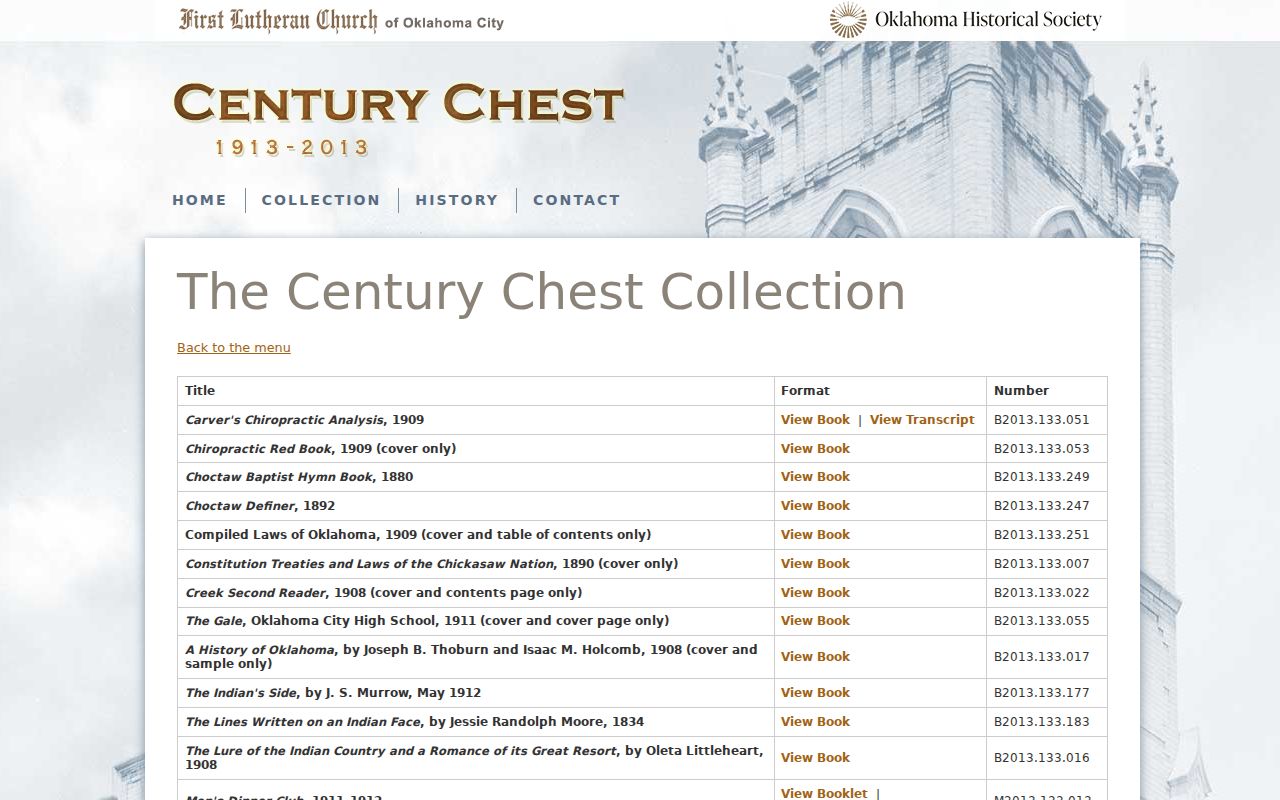
The image confirms the collection route and the 1912–1913 title, while a resident-level entry still needs inspection in an authorized viewer or at the research center.
For a broader search, the Metropolitan Library digital archive offers controls for year, material type, collection, tags, and neighborhood. It can supplement an Oklahoma City city directory with photographs, oral histories, and locally digitized material, but it is not a replacement for a volume’s printed index.
Reading Oklahoma City Directory Entries
Read each Oklahoma City city directory entry as a dated printed observation, not as a complete household roster. The OHS materials indicate that entries may carry a surname, given name or initials, address, and a business or trade clue. Some editions use married or widow notation. Later reverse entries organize the information by street and number. Conventions vary by publisher and edition, so the abbreviation page at the front or back of the exact book should be copied with the result.
| Name form | Surname, given name or initials, plus possible married or widow notation. |
|---|---|
| Street line | Number, direction, street name, suffix, and sometimes an apartment, room, or business location. |
| Trade clue | A business affiliation, professional notation, or classified-listing reference when the edition includes one. |
| Reverse line | An address-order entry in a Criss Cross edition that can point from a street to printed initials or surname. |
| Edition key | The volume’s own abbreviation list, which should not be generalized to another publisher or year. |
- Criss-cross directory
- An address-order directory. Search a street number first, then use the name index or another source to test the lead.
- Householder index
- A name-led portion of a directory that usually points to a household address for that edition.
- Abbreviation key
- The legend printed by that volume’s publisher. It explains its own shortened labels and symbols.
OHS did not expose a text-readable resident page in the official online material. That gap is a reason to inspect a non-sensitive entry in person rather than inventing punctuation, symbols, or an owner marker.
Oklahoma City Criss Cross Clues
Criss Cross Numerical Directory rows give Oklahoma City researchers a different starting point. The catalog identifies 1957, 1964, 1966 through 1973, 1978–1979, 1984–1985, 1991, and other selected rows. Begin with a known street number and direction, then read the address line in that edition. Use a Polk’s name directory to expand the name, and use newspapers or a census only as separate corroboration.
Street spelling is the recurring trap. OHS recommends spelling out numbered streets and directions when searching addresses in related newspaper sources. Try both a numerical and written form, preserve prefixes such as NW, and compare the address to the year’s map. For modern ownership or parcel records, use the Oklahoma City street directory route instead of treating an old printed address as current.
Oklahoma City City Directory Map Clues
An address in a city directory gains context when it is matched to a map from the same era. The OHS collection identifies a 1913 city map alongside the 1912–1913 directory, and the Library of Congress provides a September 1898 Oklahoma City Sanborn set of 15 sheets. OHS reports that its Research Center holds more than 3,000 Sanborn maps for Oklahoma towns, while Metro Library may offer Oklahoma Sanborn access with a library card.
Maps show a dated building footprint, street context, and use. They do not prove title or establish a present household. Compare the printed street form with the map label, then use a directory, census, deed, or newspaper result to test whether the people and place belong together. This is especially helpful where directional forms or numbered streets change across Oklahoma City sources.
Use the map as a date check. A directory address that lands on a later street pattern may need an older directional spelling or a different sheet. OHS’s house-history guidance also connects directories, assessor information, deeds, Sanborn maps, and newspapers in one sequence. The useful record trail is therefore address first, map second, and a second independent source before a family conclusion. That approach preserves the difference between a printed address, a building’s historic footprint, and a legal property description.
Oklahoma City Local History Layers
Directories become more useful when set beside the local collections that explain a name or address. Metropolitan Library System genealogy resources point researchers to Downtown holdings, librarians, and licensed databases. OHS also directs house-history research toward newspapers, directories, Sanborn maps, and maps with late-1920s through 1960s street and aerial views. A directory provides the annual address lead; each companion collection answers a different date or identity question.
Metro Library’s genealogy and local-history resources appear below.
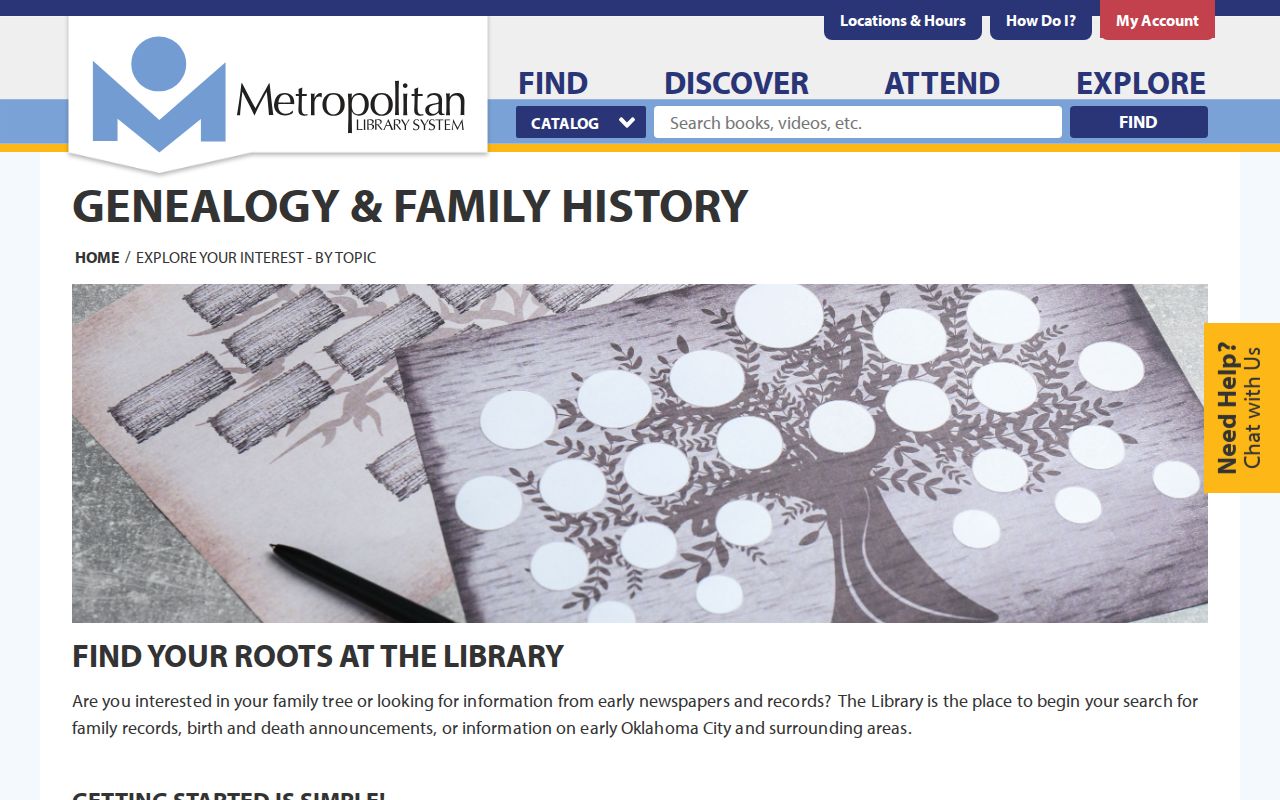
The collection adds library staff help and related historical material, which can resolve a directory entry that contains only initials or a short address line.
Trace Families Through Oklahoma City Directories
A city directory is especially useful between census releases. Federal census material is publicly released through 1950, while Oklahoma City directory rows run annually across many decades. Pair the nearest directory with the census year, then treat the two records as different snapshots. The directory may supply an intervening address. The census may supply relationship and household detail. Neither source alone proves every later move.
- Locate the first plausible name or address in the OHS catalog and record the exact edition.
- Read nearby annual or paired volumes, keeping initials, name variants, directions, and street numbers in a dated log.
- For a 1957-forward address, check a relevant Criss Cross line and then test the name against a Polk’s volume.
- Pair a directory year with the nearest available federal census, map, newspaper notice, or obituary lead.
- When a name disappears, test a move, death, changed street form, or unlisted status before drawing a conclusion.
State Archives materials add another fallback. The Oklahoma State Archives holds essential state-government records from the 1890s forward, with much of its material from 1907–1980, and currently requires an advance email request because service is at the Will Rogers Building. That route is valuable when an Oklahoma City city directory trail needs a dated government record, not when an unavailable directory should be guessed.