
Oklahoma City Previous Residents by Era
Different Oklahoma City sources overlap, and that overlap is useful. Start with the current parcel account and deed, then work toward the period you need. The Oklahoma County Clerk says written property records extend from the first U.S. patents and territorial period to the present, although the office does not publish an online index cutoff. For past residents, a transfer record establishes a title lead, while the Oklahoma Historical Society directory rows and federal census help test whether a household was actually tied to the address.
| Record trail | Located coverage | Access channel | Address evidence |
|---|---|---|---|
| County written property records | Territorial era to present in office | County Clerk, OKCC.ONLINE, counter, or Open Records request | Transfer parties and legal description |
| Oklahoma City directories | 1889–2003 rows, with gaps and paired editions | OHS Research Center and selected licensed digital rows | Annual name and printed-address trail |
| Criss Cross directories | Specific rows from 1957 through 1991 | OHS Reading Room | Address-to-occupant entries |
| Federal census | Public releases through 1950 | Census, NARA, and library databases | Household composition at the census date |
| OKC permit records | Back to 1983, with a latest-12-year default | City portal; older material through City Clerk | Project and alteration timing |
For a recent change, begin with the assessor account and the County Clerk. For an older Oklahoma City address, choose the directory year nearest the event and then compare it with the census release. An empty online result is not the end of the trail: deed books, microfilm, the county counter, library collections, and a specific request under the Oklahoma Open Records Act remain part of the access chain.
Note: Match each source to its date because title, tax-roll, permit, directory, and census dates can all describe different moments.
Oklahoma City Parcel Records First
The Oklahoma County Assessor Public Access System is the practical starting point for previous residents research because it accepts a physical address as well as owner name, account number, subdivision, block and lot, map number, deed book and page, or occupant/building name. Save the account number, situs address, mailing address, and legal description exactly as shown. The situs is the parcel location. The mailing address is where the tax notice goes, so it may not identify someone living at the parcel.
The legal description is especially important when Oklahoma City numbering, a street direction, or a parcel boundary has changed. If a street search fails, the assessor allows alternate routes through subdivision, block, lot, map number, and deed-book/page fields. Some parcels have no physical address. That is why a prior-resident search should not rely on a map label alone.
Use the City public GIS services to place the parcel in its geographic setting and to check public boundary, zoning, or Street Name Change layers. The map helps find the parcel; the legal description remains the bridge back to the deed.
Oklahoma City Deed Chain Backward
A deed chain follows the property, not a guessed household. Search OKCC.ONLINE for the current owner as grantee and for the saved legal description. The purchase instrument names the grantor, or transferor, and the grantee, or recipient. Search that earlier party as a grantee with the same lot, block, subdivision, or other legal-description language. Repeat the comparison one instrument at a time.
- Capture the current assessor account, legal description, and owner spelling before opening the deed index.
- Find the current owner as grantee, then record instrument type, instrument date, recording date, document or book/page reference, and image status.
- Search the seller from that instrument as a grantee in an earlier transaction using the same parcel description.
- Follow related plats, releases, trust transfers, probate, foreclosure, or transfer-on-death instruments when they change the chain.
- When an image or older entry is missing online, ask the County Clerk about deed books or microfilm, a copy product, or a narrowly described Open Records request.
- Grantor / grantee
- The grantor transfers an interest; the grantee receives it. Either can be an estate, trust, business, or several parties.
- Chain of title
- A dated series of recorded transfers and related instruments for one parcel, checked through its legal description.
- Legal description
- The recorded parcel wording, such as subdivision, block, lot, or metes-and-bounds, which stays more dependable than an old street label.
Recording and signing dates can differ, and a transfer does not prove occupancy. Keep a column for each date rather than treating one deed as proof of who lived at the Oklahoma City address.
Oklahoma City Deed Index Gaps
The County Clerk’s office confirms a territorial-to-present written record trail, but it does not state where the online historical index or image set stops. Treat an online no-result as a reason to change channels, not as proof that no prior transfer exists. The County Clerk page provides the office route, forms, fees, and Open Records information for recorded instruments.
Use the office counter for an older book or microfilm lead. Ask for a specific document type, name variant, legal description, and approximate date range. A targeted request is easier to search and fits the Oklahoma Open Records Act’s requirement for identifiable records. Unofficial redacted images and official copies serve different purposes, so confirm which product is needed before paying a fee.
Note: A grantor, grantee, return address, and current tax-roll name can point to different people or roles for the same parcel.
Oklahoma City Previous Residents in Directories
Title records leave gaps in the household story. Oklahoma Historical Society catalog results locate 119 Oklahoma City directory records from 1889 through 2003, with different publishers and some paired editions. Criss Cross Numerical Directory rows give the stronger address-first route for selected years beginning in 1957. Start at the street line, note the printed surname or initials, and then check a Polk’s name directory or newspaper for the same period.
The Oklahoma City Directory Book holds the fuller collection history and reading methods. For address work, preserve the edition date, the printed address form, and the exact abbreviation instead of silently modernizing them. OHS advises spelling out numbered streets and directional words in historical address and newspaper searches. Try both the current abbreviation and the written-out form before deciding a past resident is absent.
The Metropolitan Library’s archive provides a second local channel. Its search can limit material by dates, material type, collection, tags, and neighborhood, which can help place an old address in a photo, oral-history, or neighborhood collection without claiming that it lists every household.
Oklahoma City Archive Access
The Oklahoma State Archives holds essential state-government records from the 1890s forward, with bulk holdings from 1907 to 1980. Services are temporarily at the Will Rogers Building during renovations, and collection access must be requested in advance. That makes an advance email request a better plan than assuming a walk-in visit will reach an older record.
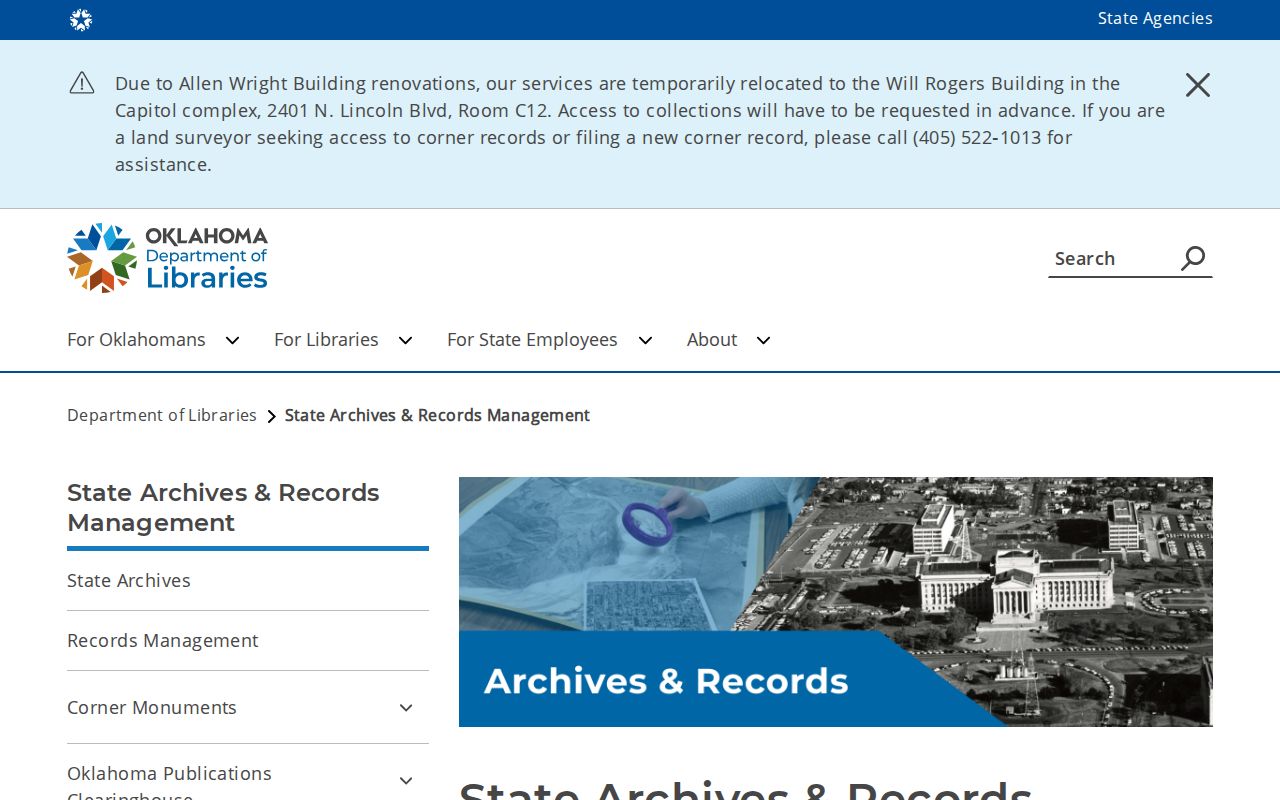
The access notice is a useful reminder that archival material is not a live property index. Give staff the address, name variants, date range, and record type already identified from the deed or directory trail.
For local collections, the Metropolitan Library digital archive lets an Oklahoma City researcher work by date, material type, collection, tag, and neighborhood. It can complement the address chain with local images, oral history, yearbooks, or vertical-file context.
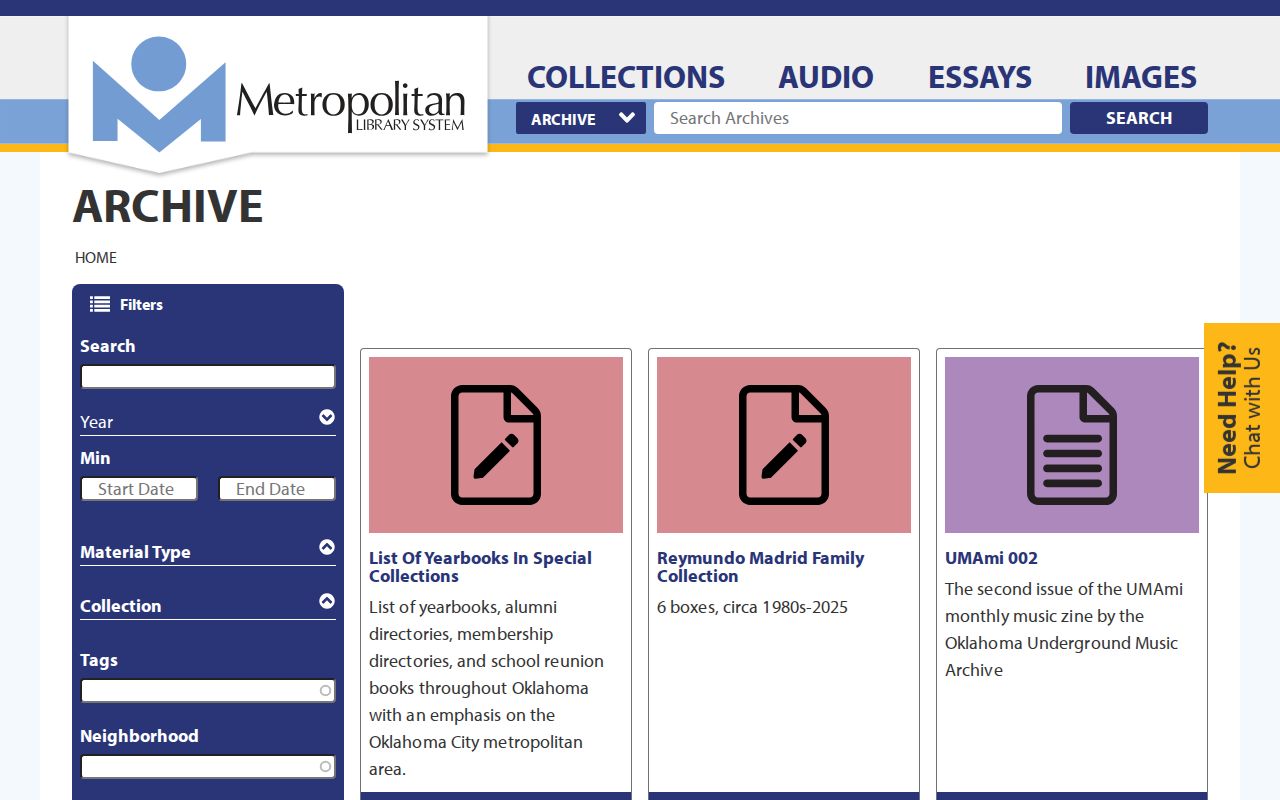
Archive results provide context for a building or area, not a complete resident list. Record the collection name and date beside every useful item so later comparisons remain clear.
Oklahoma City Census Pairing
Use a directory as an annual checkpoint and the federal census as a household snapshot. Federal releases are public through 1950 under the 72-year rule. A directory can place a printed name at an Oklahoma City address between census years, while the census may show the people enumerated together at its own date. Neither source should be stretched beyond its date.
- Choose the directory year closest to the address event and copy the street form exactly.
- Find the nearest available census release and compare the household location, names, and timing.
- Check the next directory edition for a move, a spelling change, or an address change before treating the census household as continuous.
- Add an obituary, probate file, or newspaper notice only as a dated endpoint or relationship lead, then verify it with the custodian record.
OHS identifies Oklahoman archive coverage beginning September 1, 1901 through its research route, while Metro Library and OHS offer local-history help and newspaper resources. Probate and Court Clerk files can identify heirs, representatives, and property-related parties, but they are not a substitute for the deed chain.
Oklahoma City Maps and Permits
A building footprint can explain why a directory address changes or why a parcel description needs a second look. The Library of Congress Oklahoma City Sanborn map set for September 1898 has 15 sheets. Sanborn maps show structures and uses at a dated moment, not names of every person connected to the address.
Pair that map evidence with permits and later aerial references. The City permit search accepts street number, direction, street name, suffix, ZIP, date, and related fields. Its backfile reaches 1983, while the normal display defaults to the latest 12 years; ask the City Clerk for older material. A permit can date a construction or alteration event and may name an applicant, but it does not establish a full household.
Street Name Change layers and OHS search guidance matter when old directions or numbered streets do not match a current form. Search each historical spelling before concluding the past-resident trail has stopped.
Oklahoma City Previous Residents Limits
Past residents are best understood as dated leads, not a promise of a complete list. A parcel owner, a deed party, a directory occupant, and a person named in a permit may all be different. Utility records, delivery information, driver data, and protected voter information are not public address directories. The Oklahoma Address Confidentiality Program and the State Election Board’s Restricted Records Program can also remove an expected address path.
Lawful use. Use Oklahoma City address history for family history, estate or heir research, preservation, and personal curiosity. Do not use a past-resident lead to track, harass, or harm any living person.
Oklahoma’s anti-stalking law includes Title 21, §1173. If a record involves a protected participant or a safety concern, stop the address search and use the relevant official advocacy or custodian channel instead.